maandag 30 december 2024


"Echoes of Memories "


Textile Artwork

Linen-leather-textile-print

63x 203x5 cm

2024 Maarten Donders


Echoes of Memories is a recent textile artwork I created as part of a series exploring the fragility and permanence of memory. The piece resonates with subtle movement, as though each mark or texture holds a whisper of a story. Organic forms intertwine with the raw simplicity of its materials, capturing the impermanence of moments long past. Through flowing fingerprints and layered textures, the work evokes lingering echoes of memories etched into time. Like footprints left in sand—delicate yet enduring—it invites the viewer to reflect on the intimate interplay between touch, time, and remembrance.


dinsdag 2 juni 2015

Wat zie jij?

                         Tentoonstellinghttp://dekunstwerkplaats-voorautisme.weebly.com/
Exposanten

Johr Claessens; Sarina Pennings; Erna Bie; Anneloes Lorjé; Lennie Vugt; Clim Slaats;Xaverius; Iris Rooij; Maarten Donders; Jules Hofman;Afka; Caroline Teesing

zondag 31 mei 2015

Denied , Searching & Become

http://www.360-tour.nl/stichtingcomplex/expo011/

                                           
                                                       View a tour of the exhibition


                                             Exchangeable virtue
                                             Wood- ceramics- goldleave
                                              40x20cm


                                                   Vanitas
                                                   Ceramics
                                                   125x100 cm


Exhibition Denied, searching & become
May  30-31
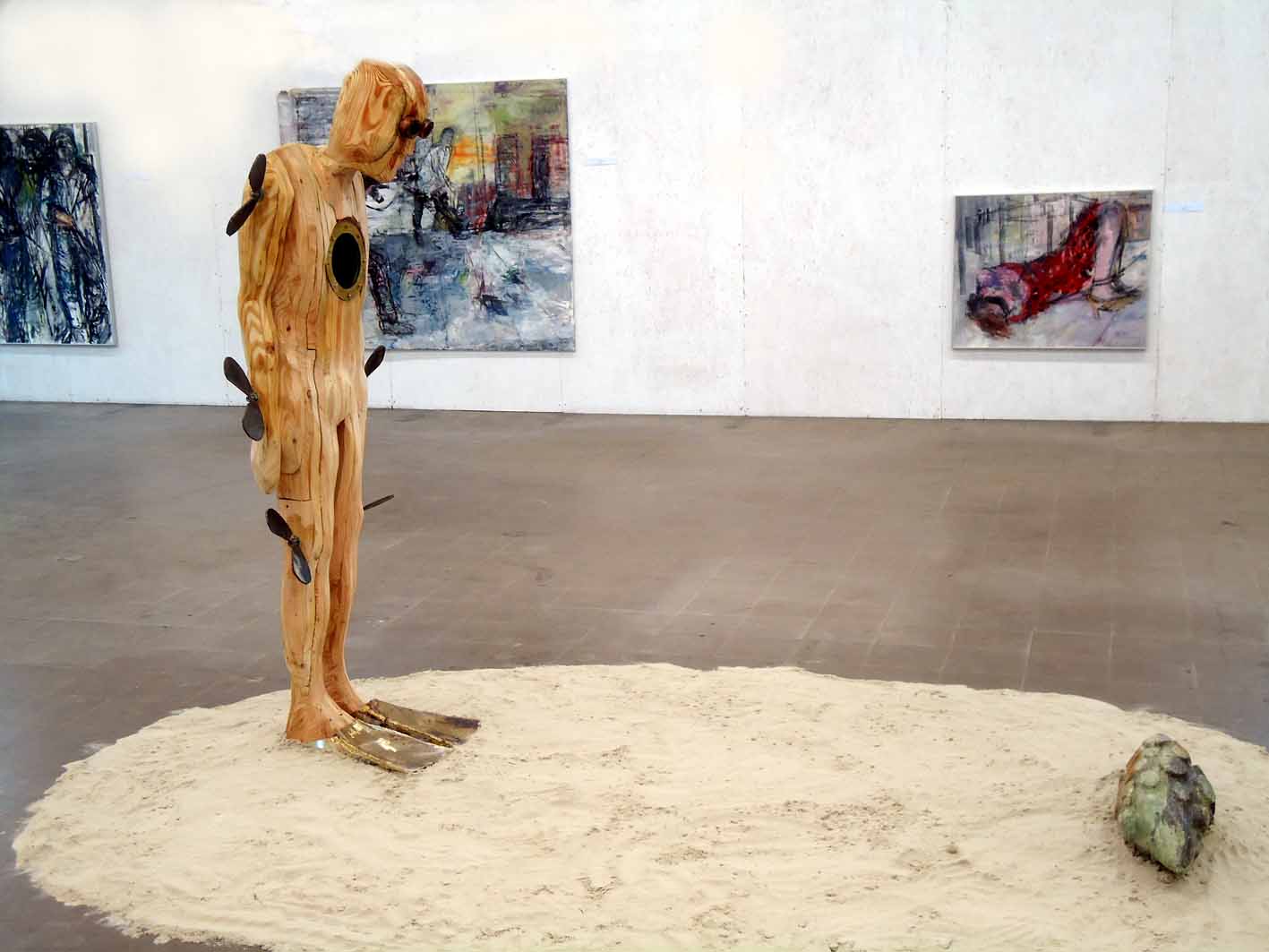
Maarten Donders Sculptures and wallobjects

De kruisruimte
Gen Bothastraat 7E 
5642 NJ Eindhoven ( Netherlands)

woensdag 1 april 2015

Réunion mysterieux


Réunion mysterieux

Ceramic sculpture
25x 20x 20 cm
                                                                             2015

maandag 10 maart 2014

Searching the sky for bits `n pieces

Searching the sky for bits `n pieces
                                                                   Bronze 40 cm

woensdag 11 december 2013

Dossier 3.0


Young people and artists come together in Dossier 3.0


To create something beautiful, away from all the problems ...

This is the motivation of the art project dossier 3.0 which Foundation `` De cultuurkantine ``has recently launched.
Various art forms are practiced where the children can tell their story. Through this collaboration with artists, they can  work without having to worry about something, that's the idea behind this project.
50 Dutch artists working with young people from care institutions.
Painters, sculptors, designers and photographers, create a work of art with these young people.
Each is working on different artistic ideas with a youngster. in their professional field
It is an honest plan to make these young people familiar with art from which something beautiful can arise.


Opening exhibition Queen Maxima Noord-Brabants Museum 
in Den Bosch with Maarten Donders

zondag 28 augustus 2011

A glimpse of reality


External impulses to a large extent determine our lives. Our life takes place in a setting where actions and images are becomming virtual. Man creates (consciously or unconsciously) its own artificial reality.


wood- steel- messing - glass- stone
300x 150x 200 cm
2011

zaterdag 20 augustus 2011

'Complex Violence' in Podium DAK

Exhibition of sculptures by Maarten Donders and paintings by Eugénie Dammer.


"Complex Violence 'runs from Saturday, August 20 t / m Sunday, September 4 and is open on Saturdays and Sundays from 13:00 to 17:00. Podium DAK is located at 2a Molenstraat in Geldrop. The entrance can be found in the parking lot of Podium DAK. (Through the steel gate bars)
Information, Ben Kollenburg 0641716164 - benvank@telfort.nl - http://www.podiumdak.dse.nl/


dinsdag 31 mei 2011

Meshes of the Afternoon - Maya Deren 1943

Director Deren (born in Kiev) was a leading experimental filmmaker in New York in the forties and fifties. With Meshes of the Afternoon in 1947 she won the International Grand Prix at the Cannes Film Festival.


"Meshes of the Afternoon 1943" is probably one of the most discussed American avant-garde film ever.
Maya Deren clearly reaches back to the surrealism from the '20s (Un Chien Andalou, Luis Bunuel and Dali) but also points in a new direction.
Deren was one of the first women who started working in film, and in this movie for the first time in history elements as psychoanalysis, dream logic and inner reality were used.

The film is a dizzying, nightmarish quest for identity and consciousness, surrealism and dream logic played an important role.
Meshes of the Afternoon was one of the first American films where poetic expressiveness and symbolism were used above a linear plot, and had immense influence on just about everything that came after.

The film assembly from Deren was never seen before, cinematic time and space were deposed of their static character.
In films of Maya Deren, these filmic time and space elements are not bound by traditional rules, but they were used in a very creative way.
Maya Deren explores in her first influential experimental film an unconscious woman who daydreams.
This experimental black and white short film shows the director himself in a threatening dream world in which she always enters the same house.
The similarity between Meshes of the Afternoon and Un Chien Andalou, is the dream experience, generated by cinema.


zaterdag 14 mei 2011

"True beauty is on the inside"


"True beauty is on the inside"


Everyone is equal, although…


There will always be a difference in gender, religious belief,
sexual orientation, social class, mental and physical health, cultural or racial background etc.

``True beauty is on the inside`` is about similarities and differences between human beings, about suffering and undergoing, about winning and losing , but also about what we have become in life.


Installation / wall objects 13 pcs

14x19x8cm 2011

wood - ceramic - tooth - bone - brass - polyester -
goldleave - rubber - lead - fabric

zondag 10 april 2011

Narrow streets and alleys

I’m standing in a field

Can’t remember the last time
I felt so lonely


Should I
leave it all behind


Let the grass
grow over

Drive away
to find


places
I’ve never been before

In narrow streets and alleys
along the shore


Filled with people
from all around


Right there..


I want to get lost
never to be found

donderdag 7 april 2011

The Thrill Is Gone

As much

as I look forward

to the moment
of reunion

a doubtful feeling
comes over me

not the years
or the months
but the wasted hours

of meaningless words
and expensive wine

The Thrill Is Gone
it is useless to wait

Before you know it
the desire starts to whine again

donderdag 31 maart 2011

Lullaby -2002- Pipilotti Rist

Your eyes

I can hear it..

if I listen to you

your words sound so different than mine

are my gestures
so different than yours


your eyes
have already said everything..

woensdag 30 maart 2011

Art as a reflection on the past

The focus of mass culture "pop art" shifted to more philosophical and therapeutic forms.
Land Art was a form of art that respond to that reflection. Nature has always been a kind of safe place for people who have turned their backs against industrialization and mass culture. To the social discontent that prevailed in the seventies, was expressed by land art artists. Artists were against capitalism. American artists compared the Vietnam War with capitalism and capitalism in the art. They wanted to escape the world of urban bustle, technologies, profit and pollution to start a dialogue with nature.


Walter de Maria ``The Lightning Field`` (1977)

Nature as exhibition space was a way to break away from becoming involved with commercial galleries or space in a museum. Not just on principle, but also because Land art artists felt that a painting or other artwork that was added to an existing space was seen as unnecessary, the room was in fact already finished.
It is clear that there was a romantic and mystical aspect of this art form , engaged in nature was a kind of meditation for the artists.


Like a composer who reads the notes he hears, the game character is important in the work of artists like Opperheim, Walter de Maria and Richard Long, which is only happening on the surface of the landscape. These artists are more interested in conventional characters used as the true dimensions of allowing time and space . These are also the artists who haven't done any physically large interventions in the landscape , which I am interested in.
Richard Long

Midday Muezzin Line 2006
It is striking how both British and American land art around 1970 show similar signs of a new romantic relationship with the landscape.
Simultaneously embody both traditions, however, a radically different approach.
Long used the landscape as an alternative for the city and visualizes it as a 'pure ' state of virgin nature.
In addition, he uses a camera, pencil and paper.
He takes an honest attitude towards the wilderness as he has just discovered and temporarily takes possession. The myth of the landscape remains maintained.
 

 By Maarten Donders  `` Traces in Time &; Space``

dinsdag 29 maart 2011

Ancient lines and sacred paths

In a number of ancient cultures an important journey is considered  a straight line.  In general, a winding path, or at least a path that is not directly straight is usually associated with primitive cultures, and a straight line with civilization. The funny thing is that there is demonstrable evidence that straight and narrow paths, encouraged by the Bible, had a specific meaning for just very old civilizations.


John the Baptist (so it’s written in the Bible) was the voice that cried "create a road through the desert for our Lord, even a path through the wilderness for our God." (Isaiah 40:3, Matthew 3:3).


Indians say about white people who build the roads, that they are curved, while Indian trails are very straight.
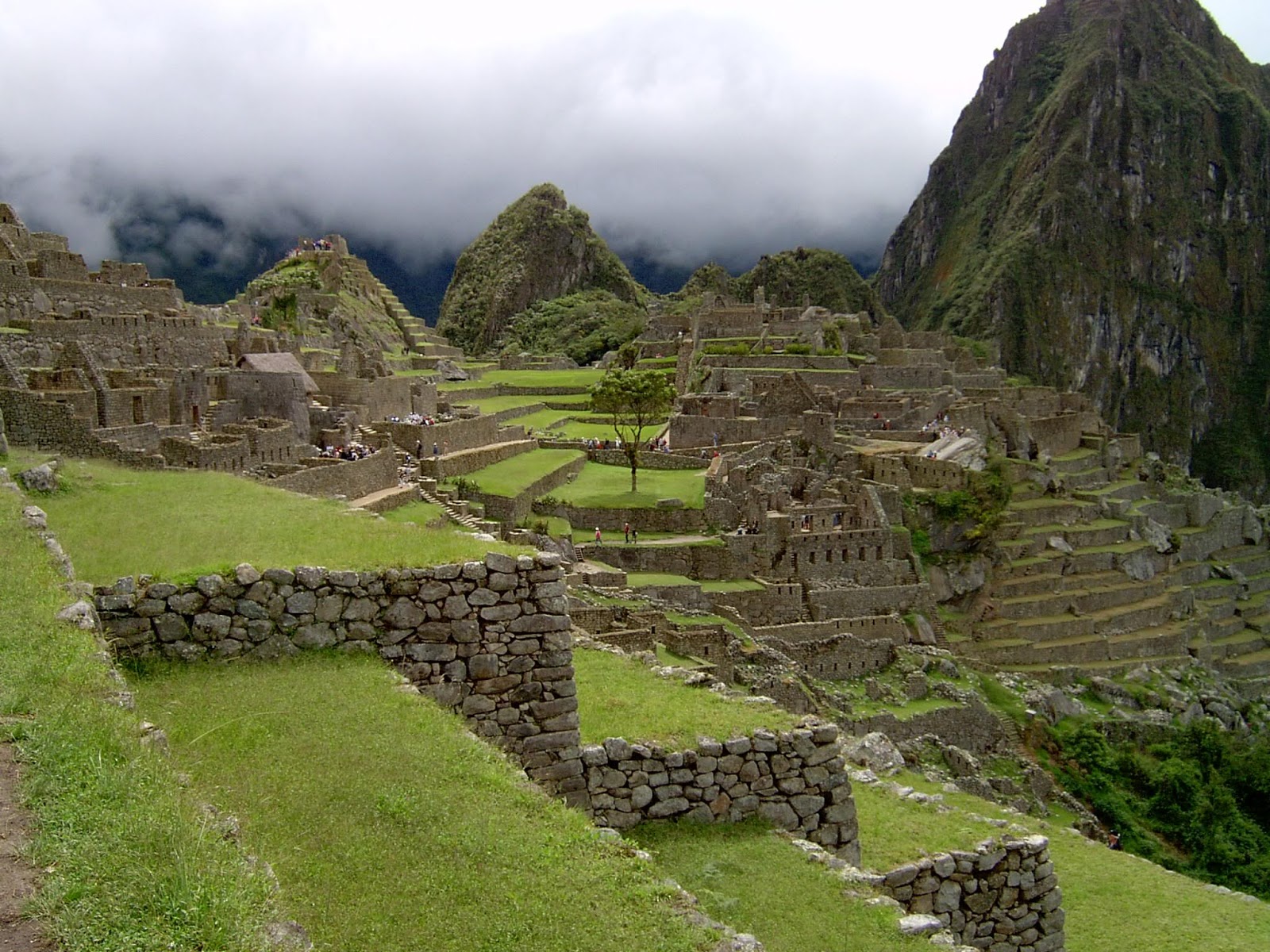
In Peru, paths are leading to holy places (often on mountain tops) and demons are waiting on those who dared to stray that way, it was thought.


The mystery regarding to the consistency or the use of straight lines in prehistoric times is only now evident by the many studies that are widely given to this fact.
Though of course the truth is that nature does not manifests itself in straight lines , but rather in circular and flowing movements.
What is actually in contradiction with straight lines and rectangular patterns.
One should not confuse human interference with natural features.

In England (and beyond) there are quite a few publications, illustrated with many maps, showing that prehistoric man would have considerable geometric knowledge, and a thorough understanding of the cosmic phenomena.
The structure of the evolving landscape would therefore be determined. This is a common basis for two research areas, namely that of the ley lines and astronomical orientation of megalithic monuments.
These are interesting phenomena, in which researchers look at the relationship between the locations (from prehistory to the Middle Ages) and their possible meanings, symbolic, cultural, historical, mythical.

Leylines = name for energy pathways where Christians and pagan peoples created their sacred places upon.


The ley research, which basically deals with a possible system in the locations relative to each of prehistoric cult sites, megaliths and shrines, was first examined by Alfred Watkins (The Old Straight Track Ways, 1925) he discovered a grid pattern of straight lines, assumed there was a link to important places.


Despite the boom in publications which have followed on, there is no scientific evidence provided.
So far it remains an intriguing hypotheses. The word Ley, originally 17th century English from the word "Laia", meaning "path in a forest".
Watkins stated the straight caracter of ley lines, as the shortest route between places.
Many old roads and trails arose by following a line along the various points along a certain route.


The main markers could include megaliths, stone circles, burial mounds, ancient stone crosses, sacred trees, wells, old settlements on prehistoric relics built churches and chapels, ancient watchtowers, old fire beacons on mountain tops, cuts in the slope of hills, etc.


By Maarten Donders  `` Traces in Time & Space``


zaterdag 26 maart 2011

Sacred lines across the landscape

Theories on the leylines of prehistory remain enigmatic. To increase the understanding about this phenomenon it is useful to look at straight lines from the early Middle Ages, in written documents which have been preserved. Leylines ,concrete or symbolic, are running across the landscape which have very different functions. Many lines seem to have had a spiritual, sacred character, such as an important part of a death cult . Others were profane, like Roman roads


Across England, there are hundreds of stones, "rows" and "circles". Ranging from a few loose stones to hundreds of meters long avenues.
There are also in Ireland and Brittany again much to be found.
Often there are  priests in white robes that may or may not make bloody sacrifices to foreign gods.
 The function of these remarkable monuments are frequently described as observatories or as a landing beacon for aliens.
The dating of these huge stone circles and the associated access roads running from 3400 BC, until, (from a few loose stones of worship places), the middle of the Bronze Age (about 1500 BC).


The English landscape has like many other places in Europe, mystical and mythical places and unexplained forms in the landscape that may be left over from an archaic era.
Our ancestors were aware of strong points in the landscape. They felt that these places had a powerful energy, a divine energy.

Here they attempted to liaise with the gods and the cosmos. Here their sanctuaries were located and practiced their religion. All shrines, places of worship in prehistoric megaliths and tumuli were located at the crossroads of energy lines, as previously mentioned.
This was done thousands of years. It was proved that churches, standing stones and cult places lie on straight lines, running over hills and through valleys regardless of the topography.
On the nature and meaning of these lines opinions vary.


By Maarten Donders  `` Traces in Time & Space``